

Pain Points Solved
What tower OPEX is made of
| Pain point | Why it happens | How ems-solar solves it |
|---|---|---|
| Diesel dominates OPEX | Off-grid towers burn thousands of liters of fuel per year, trucked at high cost | Solar-hybrid architecture cuts fuel 60–90%; modules pay back inside the conversion budget |
| Tower real estate is tiny | Ground racks and shelter roofs fit only a few panels | 400–460 W compact modules maximize kW per rack and per square meter of shelter roof |
| 24/7 uptime demands | Modules must survive 15+ years of tropical heat, humidity and salt air | IEC 61701 salt-mist rating and 0.4%/yr linear degradation — 87.4% power at year 30 |
| Fleet-scale procurement | Tower companies convert hundreds of sites in rolling schedules | Volume MOQ from 2 containers per month with fixed monthly delivery slots |
Telecom Lineup
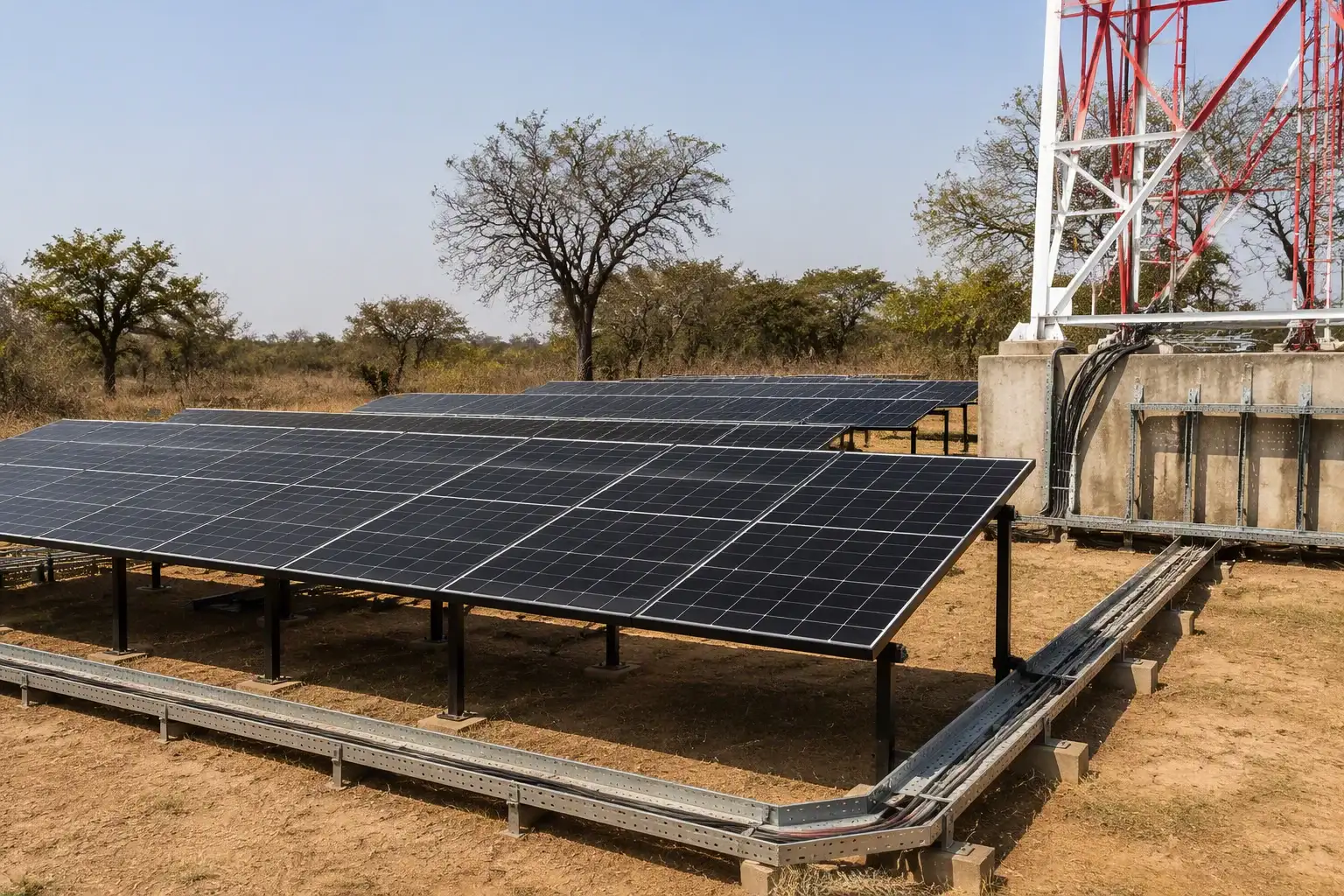
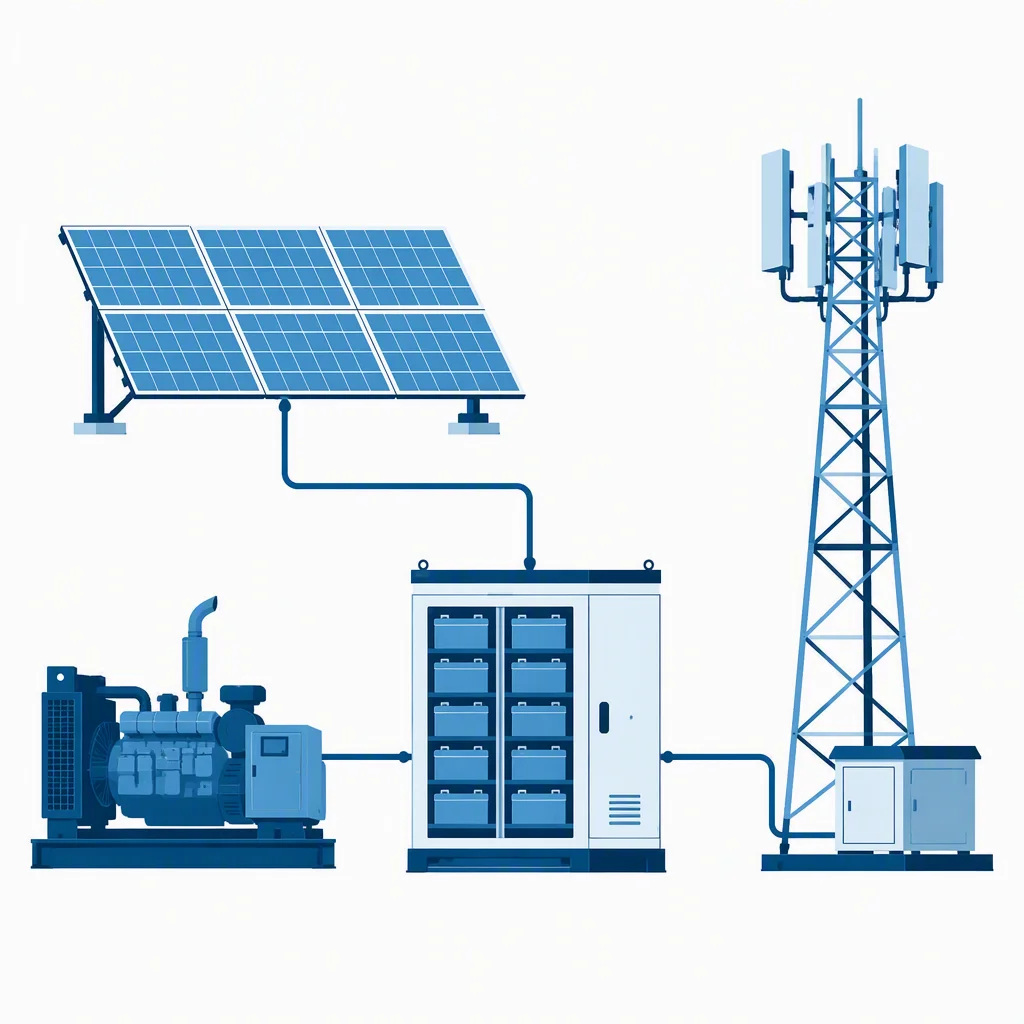
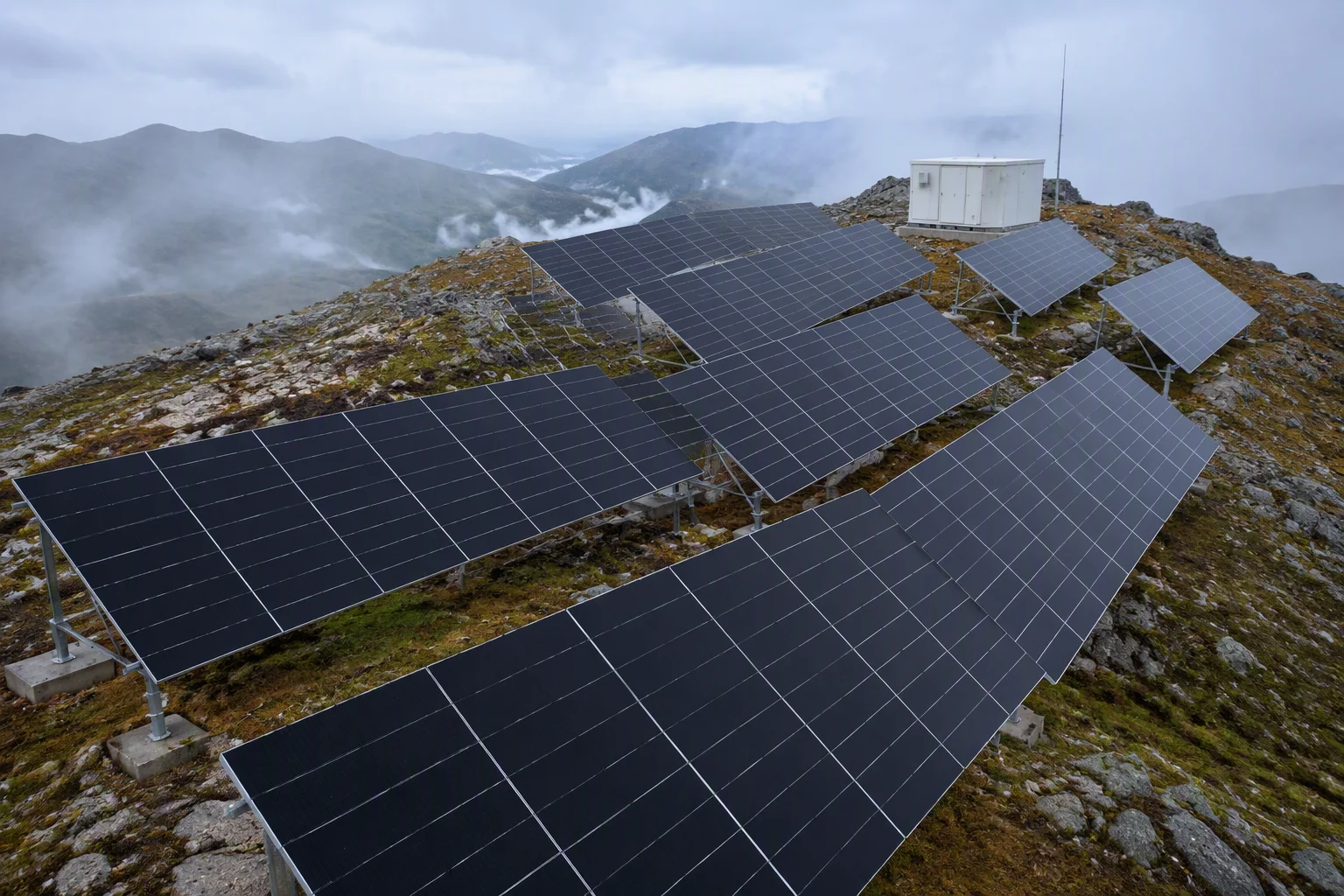
Three levers on the tower power bill
Compact high-efficiency
−0.29%/°C temperature behavior keeps output up when the shelter roof is baking at midday.
TOPCon line →Fuel-first architecture
Panels feed the load and battery by day; diesel steps back to a backup role — cutting burn 60–90%.
Cert guide →Heat-tolerant option
−0.24 to −0.26%/°C temperature coefficient for equatorial sites where every degree costs yield.
HJT line →
Technical Parameters
EMS-TC series — telecom tower modules
| Parameter | Value |
|---|---|
| Module type | N-type TOPCon (HJT option for hot climates) |
| Power range | 400–460 W compact |
| Module efficiency | 22.0–23.0% |
| Temperature coefficient | −0.29%/°C (HJT −0.24 to −0.26%/°C) |
| Dimensions | 1722×1134×30 mm / 1762×1134×30 mm |
| Weight | ~20–21.5 kg |
| Salt-mist rating | IEC 61701 |
| Damp-heat durability | 85 °C / 85% RH · 1000 h |
| Mechanical load | 5400 Pa snow / 2400 Pa wind |
| Warranty | 15-yr product / 30-yr power |
| Degradation | 0.4%/yr linear → 87.4% @ yr 30 |
| Certifications | IEC 61215/61730, CE, ISO 9001/14001/45001, IEC 62941 |
| Fleet MOQ | From 2 containers per month, fixed delivery slots |
| Hybrid saving | 60–90% diesel reduction with solar + battery + backup gen |
Telecom FAQ
Answers for tower companies and EPCs
How much diesel does a hybrid tower really save?
Solar-plus-battery architecture typically cuts fuel 60–90%: the generator runs only for maintenance cycles or extended bad weather instead of as the primary source. On a site burning thousands of liters a year, that saving funds the whole conversion.
Why compact 400–460 W modules for towers?
A tower compound fits only a few racks and a shelter roof. Compact high-efficiency modules deliver more kW per rack and per square meter than larger utility formats, and they mount cleanly on standard ground frames without heavy lifting equipment.
What makes a module survive 15 years at a tropical tower?
Three things: salt-mist rating (IEC 61701) for coastal sites, damp-heat qualification at 85 °C / 85% RH over 1000 h, and a low temperature coefficient so midday heat does not throttle output. The 15-yr product / 30-yr power warranty covers the rest.
Can you supply a rolling conversion program?
Yes — that is our standard telecom engagement: a volume MOQ from 2 containers per month with fixed delivery slots, so site teams never wait on modules. Custom branding on frame and carton is available, and container planning is locked against your conversion schedule — a market where 10.2M off-grid solar units sold globally in 2025 shows how fast the pipeline is moving.

Telecom RFQ
Get a Quote →
Send your site count — we'll lock the monthly slots.
Towers per month, rack layout and delivery region. Quote in 24 h.
