

Pain Points Solved
What C&I buyers are negotiating against
| Pain point | Why it happens | How ems-solar solves it |
|---|---|---|
| Electricity cost pressure | EU C&I tariffs stay volatile; typical self-consumption payback runs 4–7 years | 430–460 W modules cut the payback curve — up to 5% more kW per m² than the 410 W class |
| Roof area is fixed | Warehouse roofs cannot grow; every lost watt is lost revenue | 22.0–23.0% module efficiency with 54/60-cell formats that tile tight on 1000 mm rails |
| White roofs left idle | Reflective membranes reflect ~50–80% of light instead of harvesting it | Bifacial dual-glass with ≥80% bifaciality captures +5–30% rear-side gain |
| ESG tenders reject thin files | EU corporates must document Scope-2 reductions to shortlist suppliers | EPD and carbon-footprint PDFs ship with every quote; ISO 14001-backed reporting |
C&I Lineup
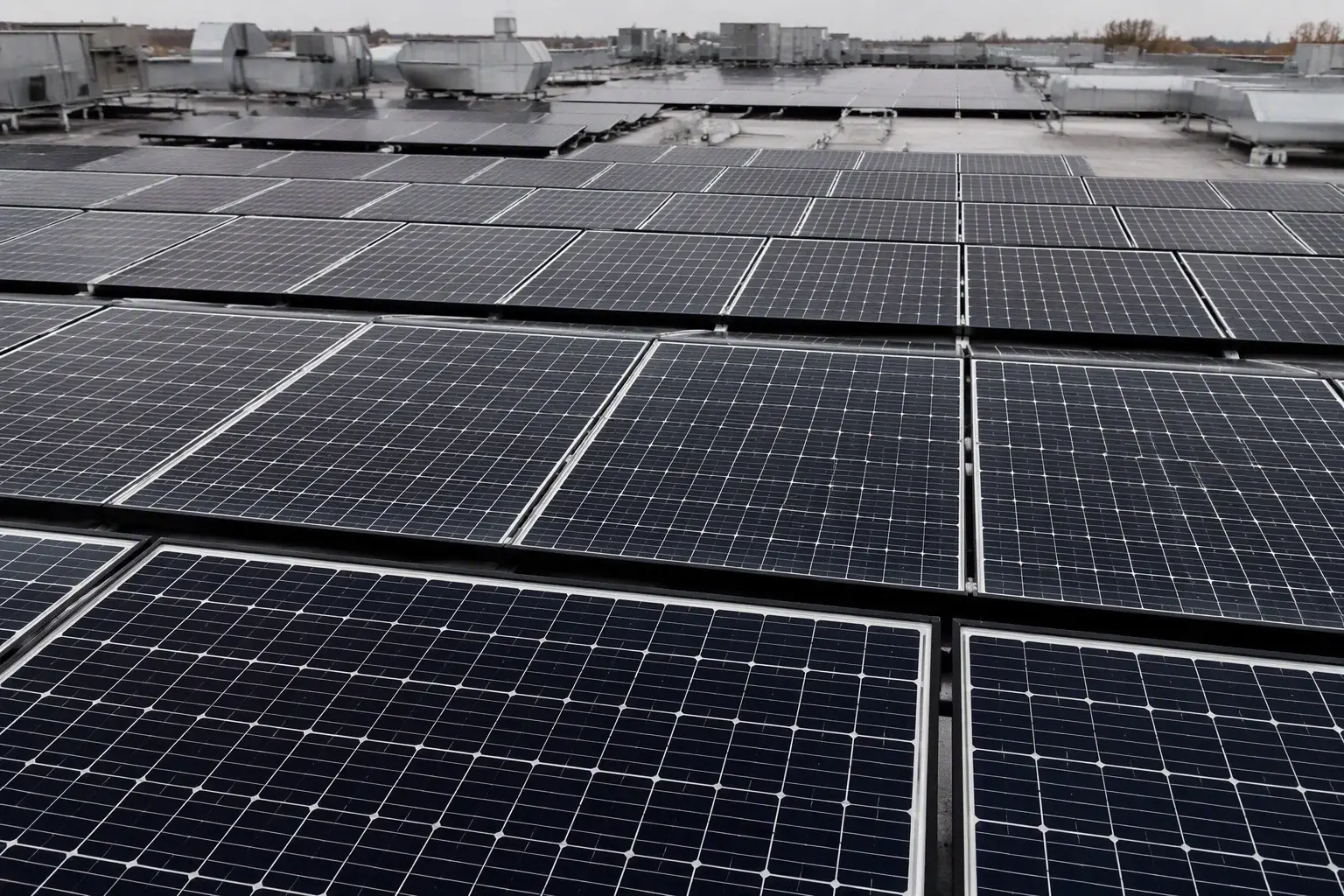
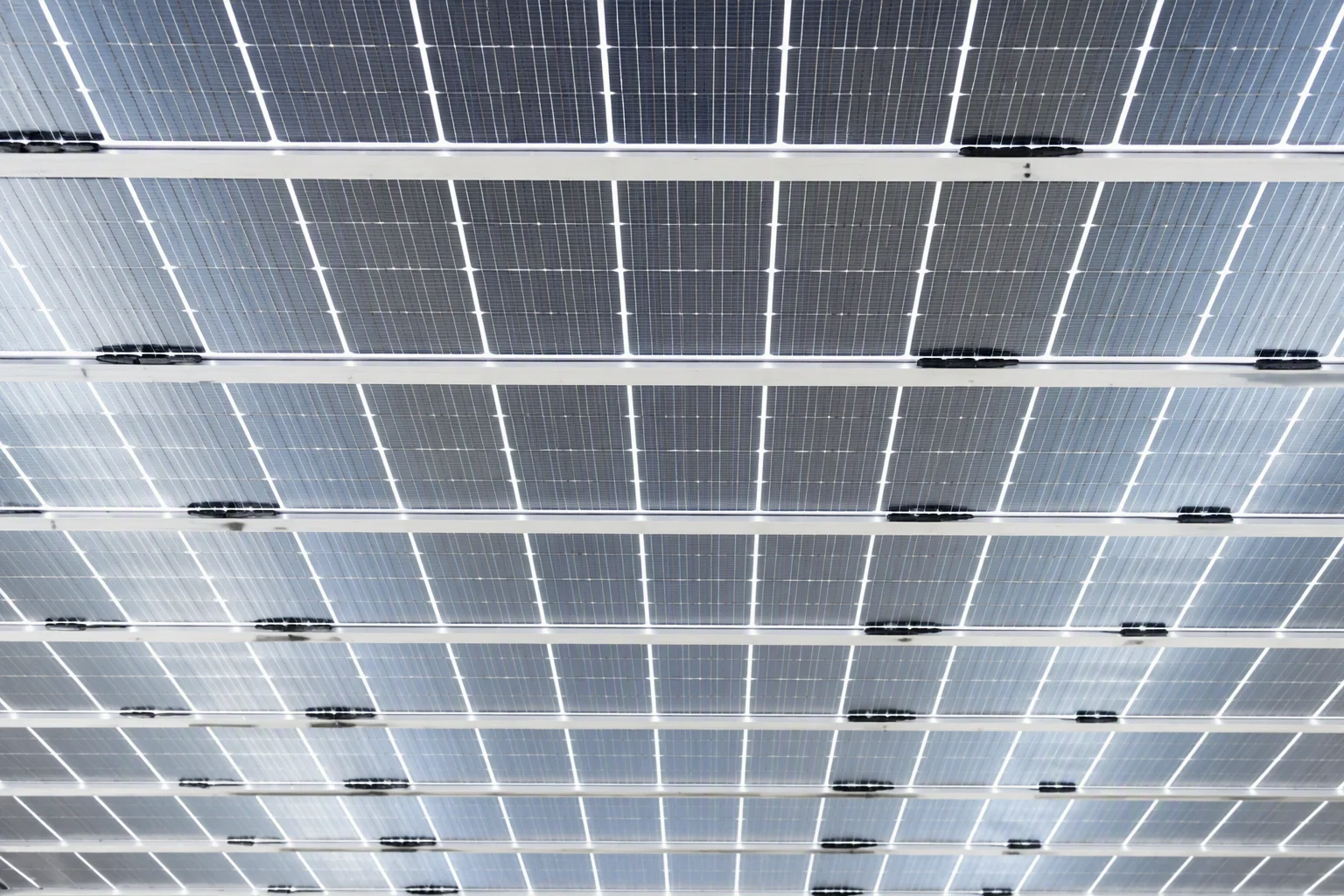
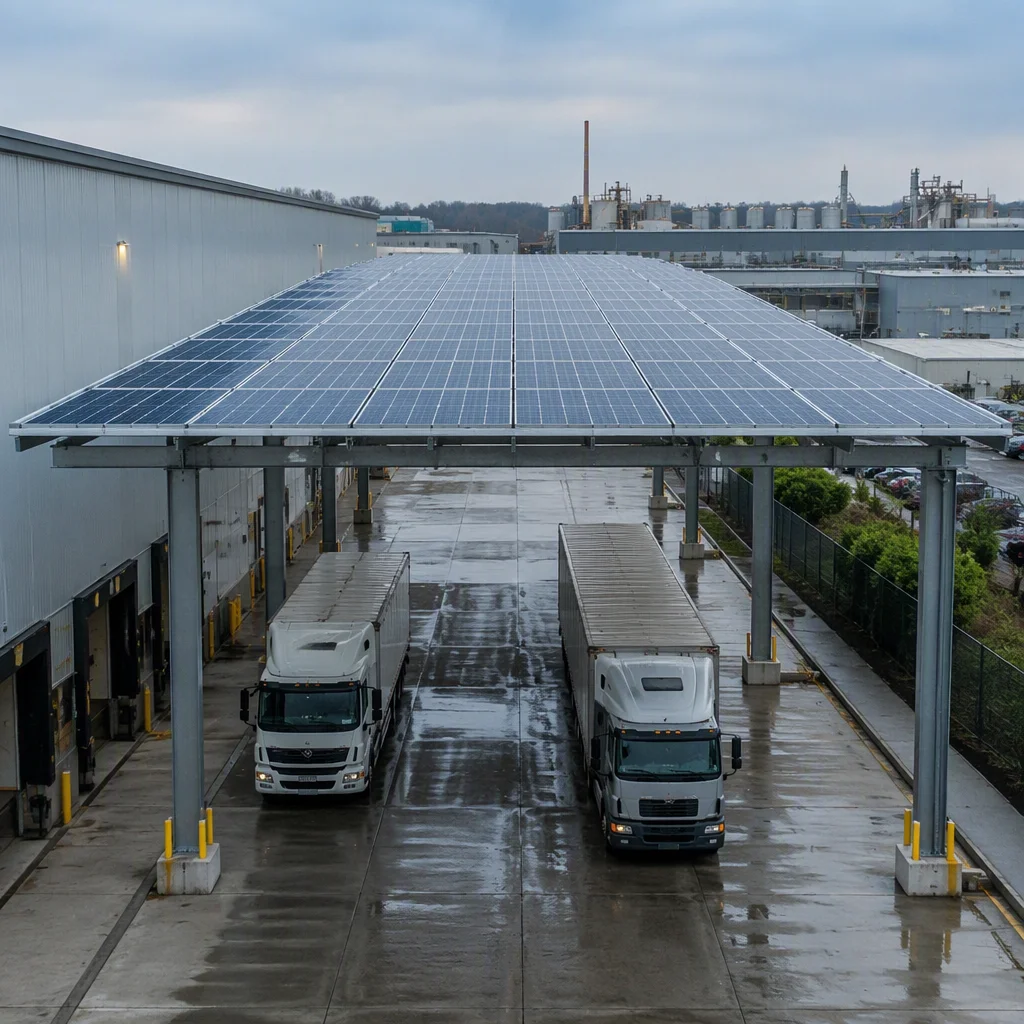
Three builds cover roof, ground and car park
High-efficiency roof build
N-type TOPCon with −0.29%/°C temperature behavior — the kW-per-m² choice for light industrial roofs.
TOPCon line →White-membrane bifacial
2.0+2.0 mm dual-glass with ≥80% bifaciality; the +5–30% rear gain is pure margin on a light roof.
Bifacial line →Carport integration
Elevated mounting adds +10–20% rear-side gain and turns parking space into a charging asset.
Carport solution →
Technical Parameters
EMS-CI series — one spec sheet for roof and carport
| Parameter | Roof build (182 half-cell) | Carport build (bifacial) |
|---|---|---|
| Module type | N-type TOPCon | N-type TOPCon bifacial dual-glass |
| Power range | 430–460 W | 430–460 W |
| Module efficiency | 22.0–23.0% | 22.0–23.0% |
| Cell efficiency | ≥26.0% | ≥26.0% |
| Bifaciality | — | ≥80% |
| Temperature coefficient | −0.29%/°C | −0.29%/°C |
| Glass | 2.0 mm front + backsheet | 2.0 + 2.0 mm tempered AR |
| Dimensions | 1762×1134×30 mm | 1762×1134×30 mm |
| Weight | ~21.5 kg | ~25 kg |
| Warranty | 15-yr product / 30-yr power | 15-yr product / 30-yr power |
| Degradation | 0.4%/yr linear → 87.4% @ yr 30 | 0.4%/yr linear → 87.4% @ yr 30 |
| Certifications | IEC 61215/61730, CE, ISO 9001/14001/45001, IEC 62941 | Same + salt mist IEC 61701 option |
| Container loading | ~900 pcs per 40'HC | ~900 pcs per 40'HC |
| ESG documents | EPD, carbon footprint, ISO 14001 | EPD, carbon footprint, ISO 14001 |
C&I FAQ
Quick answers before you tender
How much kW can I fit per m² of warehouse roof?
A 430–460 W TOPCon build at 22.0–23.0% delivers roughly 210–215 W per m² of module area — up to 5% more than the 410 W class on the same roof footprint. Framing pitch and row spacing decide the rest; we provide a loading plan with your quote.
Does a white membrane roof really add energy?
Yes. Membrane albedo runs 0.5–0.8, so a bifacial module with ≥80% bifaciality captures +5–30% rear-side gain versus the same module on dark gravel. On an elevated carport the same gain runs +10–20%.
What documentation do EU C&I tenders require?
Beyond IEC 61215/61730 and CE, EU corporates increasingly ask for EPD and carbon-footprint statements to evidence Scope-2 reductions. Both ship as PDFs with our quote package, alongside ISO 14001 and IEC 62941 certificates.
What is the minimum order for a C&I project?
Container-level pricing starts at 1×40'HC — roughly 900 pcs of the 182 half-cell format, or about 400 kW of modules. Allocation is locked for 30 days, and OEM branding (frame, J-box, box print) adds about 7 days to the 20–30 day production window.

C&I RFQ
Get a Quote →
Send your roof area — get a kW and price plan.
Roof footprint, expected load and destination port. Quote in 24 h, ESG docs included.
