
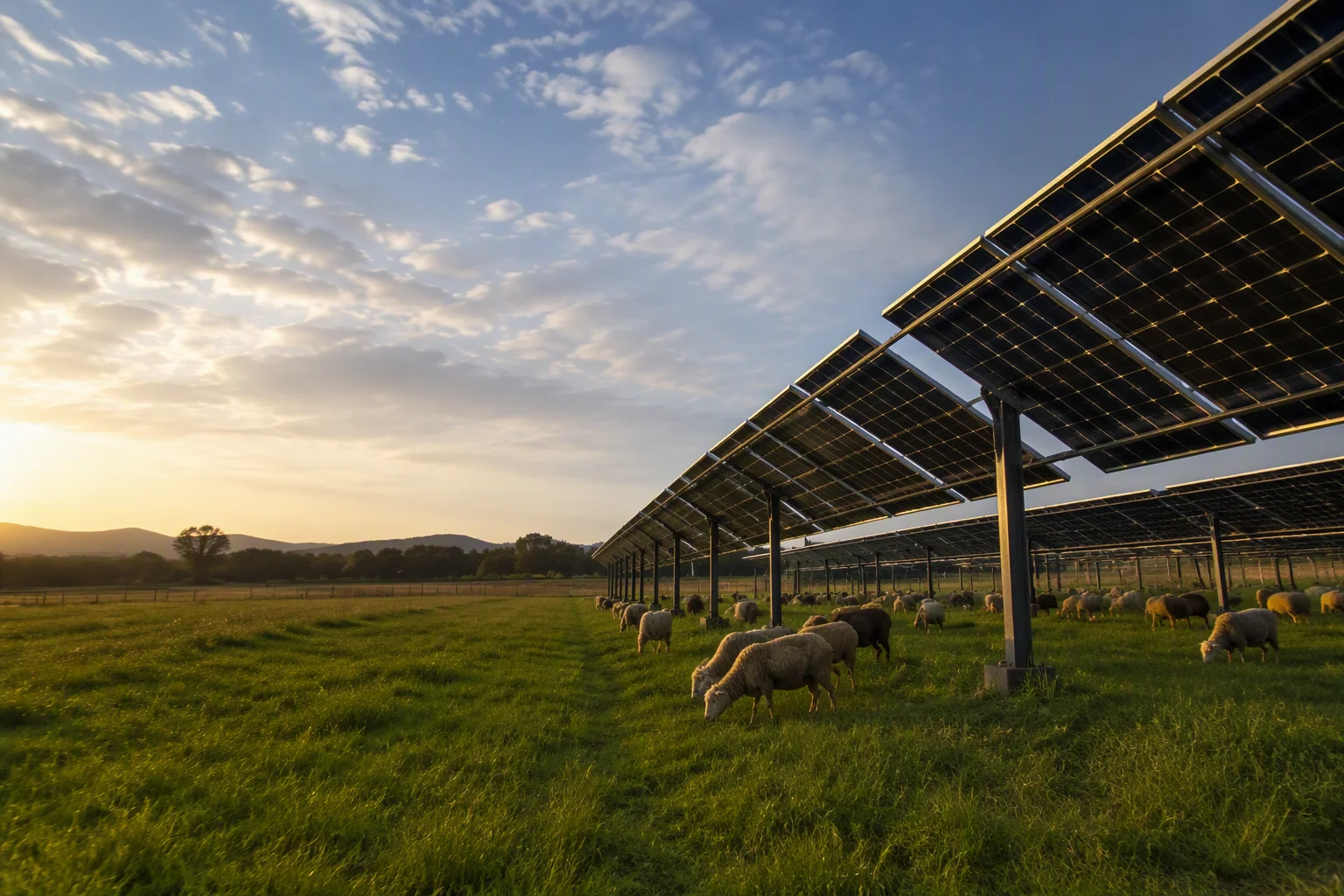
Pain Points Solved
What kills an agrivoltaic project
| Pain point | Why it happens | How ems-solar solves it |
|---|---|---|
| Land must earn twice | Farm revenue alone rarely justifies dual-use capex | Bifacial modules add power revenue on the same hectare — a market that crossed USD 5.5B in 2026 |
| Shading cuts crop yield | Wrong pitch and density reduce photosynthesis; losses reach 20–30% | Row spacing and tilt guidance keep yields stable while the raised module still generates |
| Raised structures are expensive | Elevated single-axis mounts cost 30–50% more than fixed tilt | Fixed raised rows with bifacial ≥80% rear gain capture albedo without tracker capex |
| Farm air attacks modules | Ammonia from livestock and humidity from irrigation corrode cheap builds | IEC 61701 salt mist and IEC 62716 ammonia options are standard on the agri spec |
Agri Lineup
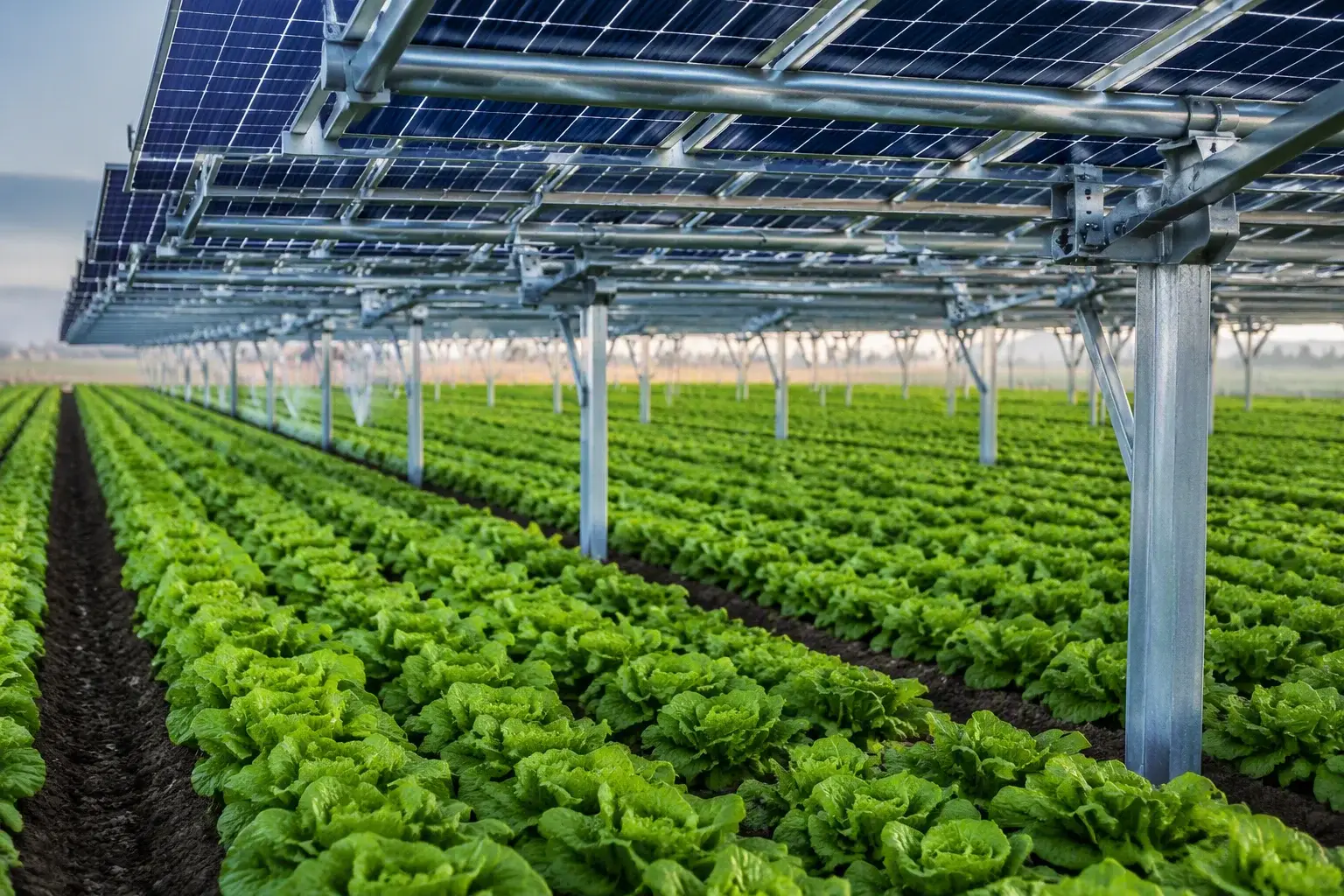
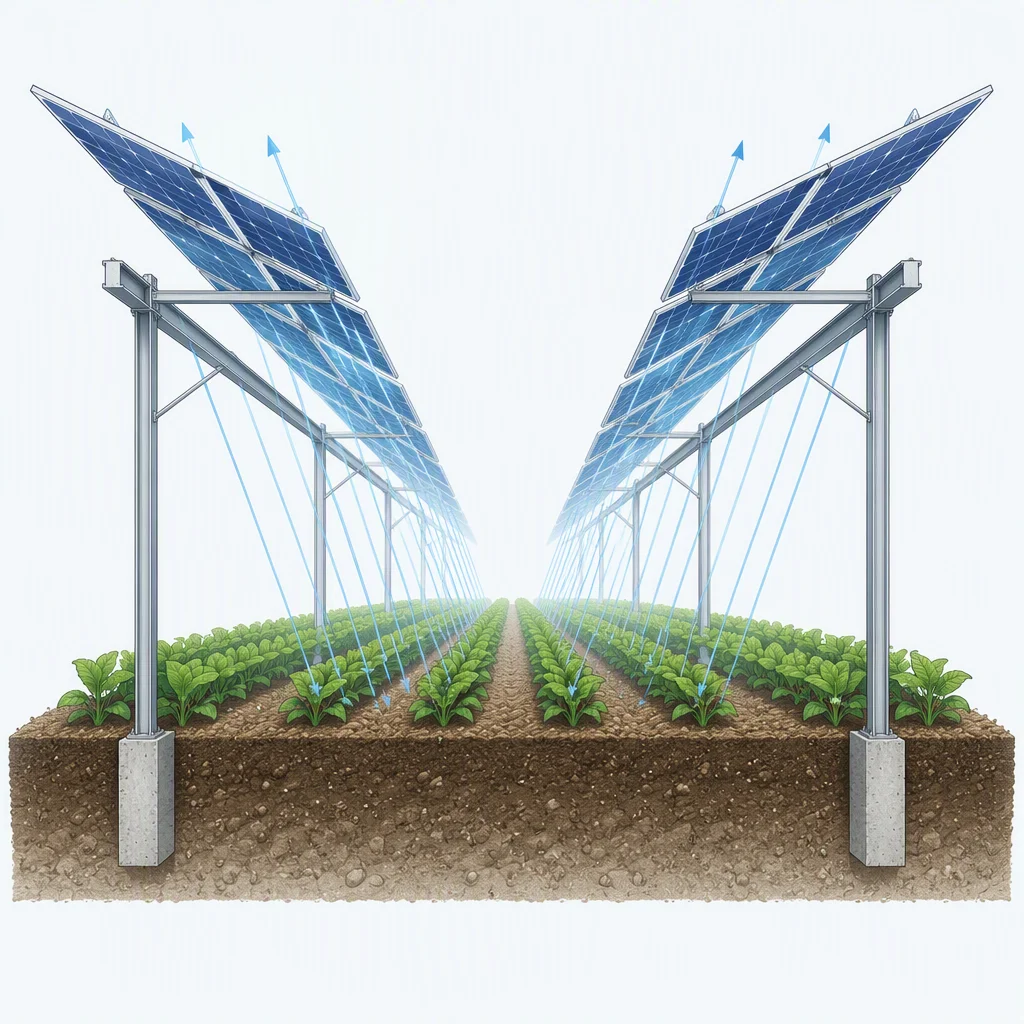
Three choices that protect both harvests
Dual-side harvest
Soil and crop albedo feed the rear face: +5–30% gain without a single extra rack.
Bifacial line →Crop-friendly geometry
2.5–4 m clearance for machinery and grazing, with row pitch tuned per crop and latitude.
Design guide →Built for the farmyard
IEC 61701 salt mist and IEC 62716 ammonia options keep 30-yr power intact next to livestock.
QC system →
Technical Parameters
EMS-AG series — agrivoltaic bifacial spec
| Parameter | Value |
|---|---|
| Module type | N-type TOPCon bifacial dual-glass |
| Power range | 430–460 W (roof) / 575–630 W (raised rows) |
| Module efficiency | 22.0–23.5% |
| Cell efficiency | ≥26.0% |
| Bifaciality | ≥80% |
| Rear-side gain | +5–30% depending on soil / crop albedo |
| Temperature coefficient | −0.29%/°C |
| Glass | 2.0 + 2.0 mm tempered AR |
| Row clearance | 2.5–4 m (site-configurable) |
| Mechanical load | 5400 Pa snow / 2400 Pa wind |
| Harsh-environment rating | IEC 61701 salt mist · IEC 62716 ammonia |
| Warranty | 15-yr product / 30-yr power (87.4% @ yr 30) |
| Certifications | IEC 61215/61730, CE, ISO 9001/14001/45001, IEC 62941 |
| Container loading | ~900 pcs per 40'HC (182 half-cell) |
Agrivoltaics FAQ
Questions farmers and developers ask
Do crops really grow under bifacial panels?
Yes, when geometry is right. Wrong shading cuts crop yield 20–30%; correct row pitch, height and tilt keep yields stable while power generation continues above. Light-sensitive crops use wider pitches; grazing and shade-tolerant crops tolerate tighter rows.
What row height should we specify?
2.5–4 m of underside clearance is the working range — enough for standard farm machinery to pass and for sheep to graze underneath. Fixed raised rows deliver most of the bifacial gain without the 30–50% capex premium of single-axis trackers.
Do we need special modules near livestock?
Ammonia from manure and humidity from irrigation are real corrosion drivers. The agri spec carries IEC 62716 ammonia and IEC 61701 salt-mist options as standard, with 2.0+2.0 mm tempered glass front and back.
Is the market actually funding this?
Agrivoltaics crossed USD 5.5B globally in 2026, and EU member states fund dual-use pilots under CAP strategic plans. Over 90% of new renewable capacity is already cheaper than fossil alternatives — dual-use farms are where the subsidy and the tariff meet.

Agri RFQ
Get a Quote →
Tell us the crop and the latitude.
We return a module spec, row geometry guidance and a pallet-level quote in 24 h.
